New Real-World Data for Miach Orthopaedics’ BEAR® Implant Demonstrate Low Retear Rates and Clinically Meaningful Improvements Following ACL Restoration
BEAR Implant Surpasses 10,000 Patients Treated Commercially
Press Release Disclaimer: This is a press release distributed through the XPR Media network. It has not been independently verified by our newsroom.


Miach Orthopaedics, Inc., developer of the BEAR® Implant for anterior cruciate ligament (ACL) restoration, today announced publication of new two-year results from the post-commercialization Bridge Registry, published in Knee Surgery, Sports Traumatology, Arthroscopy (KSSTA)1, demonstrating low ACL retear rates and excellent patient-reported outcomes in real-world clinical practice. Publication coincides with the milestone of more than 10,000 patients treated with the BEAR Implant in the U.S. since commercial launch.
This press release features multimedia. View the full release here: https://www.businesswire.com/news/home/20261007475750/en/
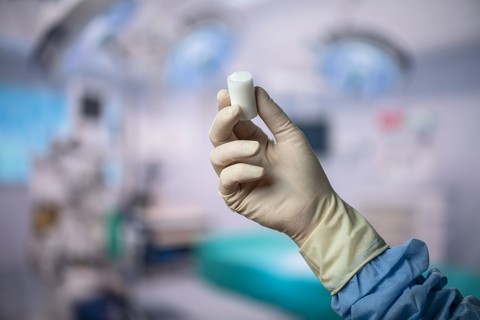
In the first 100 Bridge Registry patients followed for two years, the overall ACL retear rate was 5.6%, with no retears during the first postoperative year. Among patients treated using a modified surgical technique, the retear rate was 2.5%, compared to 8.0% with the original technique. Patient-reported outcomes demonstrated substantial and continued improvement in knee function: At two years, mean IKDC was 87.4, while KOOS scores were 94.7 for pain, 97.6 for activities of daily living, and 88.2 for sports and recreational function. The study authors reported that these improvements were clinically significant and meaningful, with postoperative scores exceeding established patient-acceptable symptom-state thresholds.
“These two-year outcomes reflect real-world use of the BEAR Implant after its commercial release, and they show low retear rates across a broader range of patients than the original trials studied,” said Jocelyn Wittstein, MD, lead author of the Bridge Registry two-year analysis. “The registry includes younger patients at high risk and older patients at lower risk. Seeing low rates of retear and continued improvement in patient-reported outcomes through two years gives surgeons greater confidence as they counsel patients and select candidates for ACL restoration.”
Clinical Experience Improves Outcomes
While the BEAR Implant itself has remained unchanged since commercial launch, the study documents how the BEAR Implant procedure has evolved through commercial experience. Surgeons have increasingly adopted modified approaches involving different fixation methods, stronger sutures and alternative suture patterns.
The BEAR Implant rehabilitation protocol has also evolved based on surgeon and physical therapist experience, with refinements designed to support healing while helping patients safely progress toward their functional goals. A central focus of the refined protocol is guiding each patient’s progression toward return to activity at a pace that supports the healing ligament. Most patients in the Bridge Registry who played sports before their injury returned to play, with 87.2% back in sport by two years, underscoring why a measured return matters.
“The Bridge Registry results are outstanding and provide real-world validation of the BEAR Implant procedure after commercial launch,” said Jamal Rushdy, president and chief executive officer of Miach Orthopaedics. “Combined with the experience of more than 10,000 patients, these data demonstrate the momentum we see with surgeon adoption. Miach is on a path to define the standard of care for joint preservation through ACL restoration.”
About the Bridge Registry
The Bridge Registry (NCT05398341) was initiated in May 2023 to assess real-world outcomes for the BEAR Implant. Primary outcomes being tracked include knee function and feeling measured by the International Knee Documentation Committee (IKDC) Subjective Knee Evaluation at two years and knee laxity measured with Lachman scoring at one year; Knee Injury and Osteoarthritis Outcome Score (KOOS) domains were also measured at two years. A total of 300 patients were enrolled at nine sites: AdventHealth, Boston Children’s Hospital, Duke University, Hospital for Special Surgery, Oregon Health and Science University, Stanford University School of Medicine, Steamboat Orthopaedic & Spine Institute, Victory in Motion/Auburn Community Hospital and Virtua Health.
About the BEAR® Implant
The BEAR (Bridge-Enhanced ACL Restoration) Implant was first granted De Novo Approval from the U.S. Food and Drug Administration in 2020. In 2025, the FDA expanded the indication to include children as young as age 2, with no upper age limit, as well as partial ACL tears. In 2026, the FDA updated BEAR Implant labeling to reflect a reduced risk of post-traumatic osteoarthritis (PTOA) compared with ACL reconstruction using hamstring tendon autograft.
The BEAR Implant is a proprietary collagen-based implant used to facilitate healing of the torn ACL. The BEAR Implant is the first medical technology to demonstrate, with Level 1 clinical evidence, that it enables the body to heal its own torn ACL. Unlike ACL reconstruction (ACLR), which is the current standard of care, the BEAR Implant does not require a second surgical wound site to remove a healthy tendon from another part of the leg or the use of a donor tendon. The BEAR Implant acts as a bridge to help ends of the torn ACL heal together. The surgeon injects a small amount of the patient’s own blood into the implant and attaches it between the torn ends of the ACL in a minimally invasive procedure. The combination of the BEAR Implant and the patient’s blood enables the body to heal the torn ends of the ACL back together while maintaining the ACL’s original attachments to the femur and tibia. As the ACL heals, the BEAR Implant is resorbed by the body.
In patients 14 years and older who have an ACL injury with concomitant knee injuries, ACL restoration with the BEAR Implant reduces the risk of developing PTOA (Kellgren-Lawrence grade 2 or higher), at 6-years post-surgery, compared to ACLR surgery using hamstring tendon autograft.
The BEAR Implant is indicated for adults, adolescents and children with a complete or partial rupture of the ACL, as confirmed by MRI. Patients must have an ACL stump attached to the tibia to construct the repair. Children with open physes must have sufficient bone in the femoral and tibial epiphyses on either side of the intended tunnel locations to avoid disruption of the growth plates. Visit www.miachortho.com for complete product information, including Instructions for Use.
About Miach Orthopaedics, Inc.
Miach Orthopaedics, Inc., is a privately held company located in Westborough, Massachusetts, dedicated to developing surgical implants to facilitate connective tissue restoration. The company’s initial focus is the BEAR® Implant, which represents a paradigm shift in the treatment of ACL tears. For more information on Miach Orthopaedics and its products, visit www.miachortho.com and follow the company on LinkedIn.
BEAR® Implant is a registered trademark of Miach Orthopaedics.
1 Wittstein J, Strickland S, Gomoll A, Sherman S, Lau B, Taylor D, Kramer D, Keyes S, Meininger AK, Pietropaoli M, McMillan S, Brady J. Two-year follow-up of postcommercialisation cohort of 100 bridge-enhanced anterior cruciate ligament restorations shows low retear rate and good patient-reported outcomes. Knee Surg Sports Traumatol Arthrosc. 2026 Sep 30. doi: 10.1002/ksa.70606. PMID: 42814471
View source version on businesswire.com: https://www.businesswire.com/news/home/20261007475750/en/
Media gallery