Stainless Steel Tanks Enhance Legionella Control in Heat Pumps
GUANGZHOU, GUANGDONG, CHINA, September 21, 2026 /EINPresswire.com/ -- Why Heat Pump Systems Have Higher Legionella Risk
Press Release Disclaimer: This is a press release distributed through the XPR Media network. It has not been independently verified by our newsroom.

GUANGZHOU, GUANGDONG, CHINA, September 21, 2026 /EINPresswire.com/ — Why Heat Pump Systems Have Higher Legionella Risk Than Traditional Boiler Systems
Traditional gas and oil boilers regularly heat water to 60°C or higher, naturally disinfecting the storage tank as part of normal operation. Even if some bacteria survive, the frequent high-temperature cycles keep populations low. Heat pump systems, by contrast, are optimized for energy efficiency and typically operate at lower flow temperatures — often 45–55°C for domestic hot water and 35–45°C for space heating.
This creates two key legionella risk factors that are unique to heat pump installations:
1. Extended residence time in the growth zone
Water spends far more time in the 20–45°C temperature range where legionella multiplies most rapidly. During mild spring and autumn weather, systems may run for weeks without ever reaching disinfection temperatures.
2. Frequent low-load operation
Part-load operation reduces water circulation velocity, allowing stagnant zones to develop in low-flow areas of the tank and pipework.
Because of these characteristics, heat pump hot water systems require more deliberate hygiene design and more structured disinfection protocols than equivalent boiler systems. The storage tank is the most critical component in this picture, because it is where the largest volume of water sits for the longest time.
How legionella grows in storage tanks
Legionella bacteria do not grow freely in clean, moving water. They live inside biofilm — a thin, slimy layer of microorganisms that adheres to interior surfaces. Biofilm provides protection, nutrients and a stable environment for bacterial colonization. Once biofilm is established on tank walls, regular temperature disinfection becomes much less effective because bacteria deep inside the biofilm survive exposure to heat. The key to long-term legionella control is therefore to prevent biofilm from forming in the first place — and that depends heavily on tank material and surface quality.
Hygiene Weaknesses of Glass-Lined & Carbon Steel Tanks
Coated carbon steel tanks have inherent structural weaknesses that increase bacterial colonization risk over time, making them poorly suited for commercial heat pump systems with strict hygiene requirements.
1. Micro-cracked enamel surfaces harbour protected biofilm
Repeated heat pump thermal cycling creates micro-fractures in the brittle glass lining over years of use. These tiny cracks trap organic debris, sediment and bacteria, forming protected biofilm pockets that survive standard thermal disinfection. Because the bacteria are hidden inside coating defects, they cannot be reached by normal water flow or heat treatment and become a permanent source of recontamination.
2. Sacrificial anodes create nutrient-rich sediment
Magnesium sacrificial anodes degrade continuously, releasing fine metal particles and hydroxide compounds that settle into tank bottom sediment layers. These mineral-rich deposits become ideal breeding grounds for legionella and associated bacteria. The sediment layer also insulates bacteria from heat during disinfection cycles, allowing them to survive temperatures that would normally be lethal.
3. Rough corroding surfaces accelerate biofilm formation
Once the enamel coating fails in places, rusted porous steel surfaces provide perfect adhesion points for biofilm growth, accelerating bacterial colonization year after year. A heavily corroded tank interior has dozens of times more surface area for biofilm attachment than a smooth stainless steel surface.
4. Dead water zones and stagnant corners
Generic internal designs with poorly positioned inlets and outlets create stagnant low-flow corners where water never circulates, permanently harbouring bacteria. These dead zones act as permanent bacterial reservoirs that continuously reinfect the rest of the system.
5. Sensor wells and fittings create crevice sites
Threaded fittings, sensor pockets and flange connections on carbon steel tanks often have narrow gaps and crevices where water sits stagnant and biofilm develops undetected.
Common Legionella Control Technologies and Their Compatibility With Tank Materials
Facility managers use several different legionella control strategies, each with different implications for tank material selection:
Control method How it works Compatibility with glass-lined steel Compatibility with stainless steel
Thermal disinfection (60–70°C cycles) Periodic high-temperature heating to kill bacteria Poor — repeated thermal shock accelerates enamel cracking Excellent — withstands unlimited thermal cycles without degradation
Copper-silver ionization Releases trace metal ions to suppress bacterial growth Moderate — can accelerate coating corrosion at high doses Excellent — fully compatible at standard concentrations
UV disinfection Ultraviolet light treats water passing through the system Neutral — works on water but cannot treat biofilm on tank walls Neutral — works best with smooth surfaces that have less biofilm
Chlorine / chloramine dosing Chemical disinfection of water Poor — accelerates coating degradation and pitting Good — 316L tolerates normal disinfectant levels well
Thermal disinfection is by far the most common method used in European commercial heat pump systems, because it requires no ongoing chemical consumables and is widely accepted by health authorities. This makes stainless steel the clear preferred choice, since it tolerates repeated thermal shock without degradation.
How Premium Stainless Steel Tanks Eliminate Legionella Risk at the Source
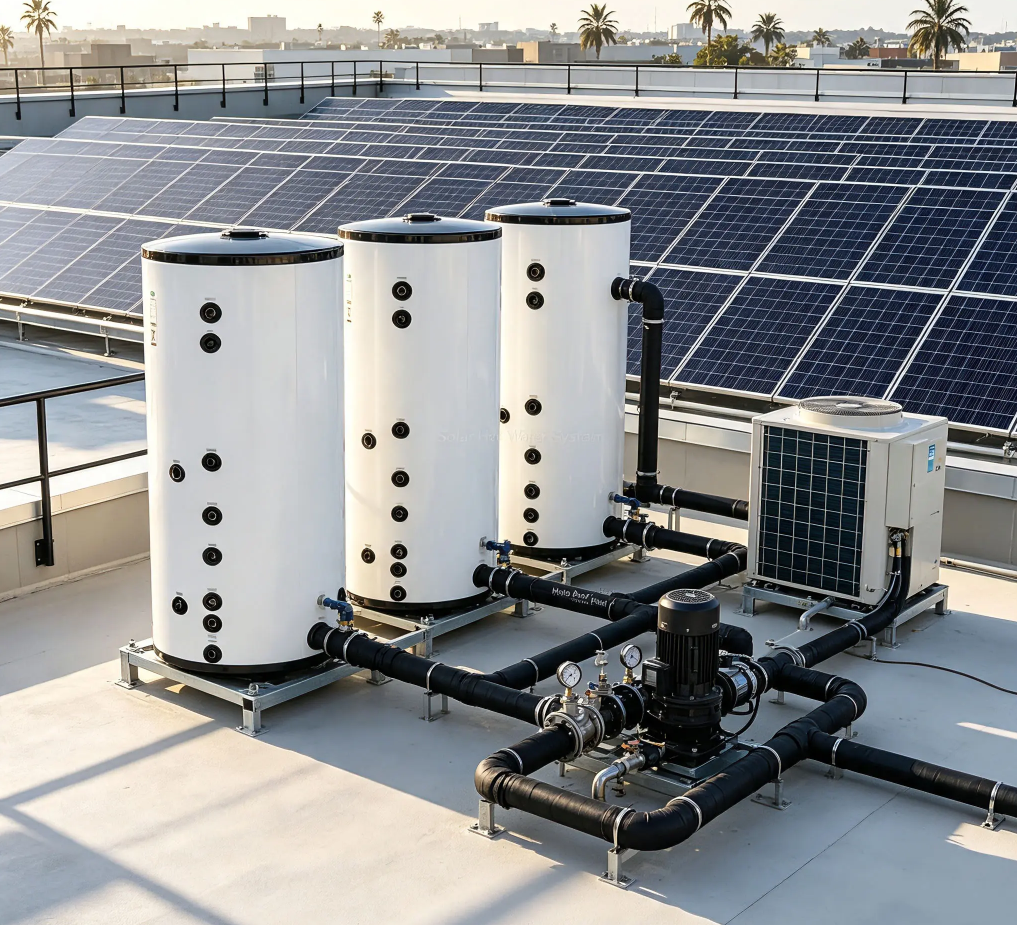
SST stainless steel DHW and hybrid tanks are engineered specifically for long-term sanitary compliance, solving every major hygiene flaw found in carbon steel alternatives at the design stage.
1. Non-porous, ultra-smooth internal surfaces
Polished 304/316L stainless steel has a completely flat, non-porous molecular surface. Biofilm cannot anchor firmly to stainless steel surfaces the way it does to porous enamel or rusted steel. When biofilm cannot establish strong adhesion, regular water circulation and periodic thermal disinfection eliminate bacteria effectively and completely.
2. No sacrificial anodes required
Stainless steel tanks rely on natural chromium oxide passivation for corrosion resistance, requiring no sacrificial magnesium or aluminium anodes. This eliminates anode sediment contamination entirely, removing a major bacterial nutrient source and the insulating sediment layer that protects bacteria from heat.
3. Full thermal shock resistance
Stainless steel withstands repeated 60–75°C sanitization cycles with zero structural degradation, no micro-cracks and no material fatigue. The tank can be thermally disinfected as often as required by local health regulations without any loss of performance or service life.
4. Optimized internal flow geometry eliminates dead zones
SST internal baffle and dip tube design is hydraulically optimized to ensure complete water circulation and eliminate dead water zones. Every part of the tank volume sees regular flow, preventing stagnation and removing the conditions that allow bacterial colonies to establish.
5. Easy complete sediment removal
Large-diameter bottom drain ports allow full removal of settled fine particles during annual maintenance, leaving no bacterial nesting material inside the tank. Smooth tank walls and rounded bottom dishes prevent sediment from catching in corners and crevices.
6. Hygienic weld and connection design
All internal welds are ground smooth and passivated, eliminating crevices where biofilm could hide. Sensor wells are deep immersion designs with smooth walls, and all connection points are engineered to minimize stagnant gaps.
SST Tank Design Features for Commercial Hygiene Compliance
For commercial projects subject to official legionella auditing, SST tanks include specific features to simplify compliance:
Multi-point G1/2″ temperature sensor ports at top, middle and bottom heights to verify full-tank sanitization coverage and prove temperature uniformity during audits
Uniform internal weld polishing to eliminate crevice contamination and meet hygienic design standards
Full compatibility with automated legionella thermal disinfection programs integrated into modern heat pump controllers
Zero internal dead legs and stagnant zones, verified by CFD flow simulation
Full WRAS, ACS and DVGW-compliant material grade options to meet national drinking water regulations
Full material traceability and hygienic construction documentation for audit submission
Professional Compliance Best Practices for Installers
Even with premium stainless steel tanks, installers and facility managers must follow standardized hygiene protocols to maintain compliance:
Program the heat pump controller to run automatic high-temperature sanitization cycles at least once per week, with the entire tank volume reaching 60°C for a minimum of 30 minutes.
Avoid excessive tank oversizing that increases water stagnation time. Tanks should be sized to match actual demand, not maximized beyond need.
Eliminate long unused pipe dead legs during system design, and install circulation loops for infrequently used outlets.
Perform annual full tank sediment flushing and internal inspection where possible.
Maintain accurate temperature logs and maintenance records for health authority audit purposes.
Test water for legionella periodically according to local regulatory requirements.
Case Study: German Student Accommodation Hygiene Upgrade
A 180-bed student housing complex in North Rhine-Westphalia, Germany, failed its annual legionella inspection in 2019. The existing 20-year-old glass-lined hot water tanks showed heavy internal corrosion and persistent bacterial contamination despite regular thermal disinfection. The facility management team decided to replace all three tanks with SST 1500L 316L stainless steel tanks paired with high-temperature heat pumps.
In the five years following the upgrade, all quarterly legionella tests have returned fully compliant results below the detection threshold. Maintenance time spent on the hot water system has dropped by roughly 30%, because the stainless steel tanks require no anode replacement and minimal internal servicing. The engineering firm responsible for the project now specifies SST stainless steel tanks as standard for all their student housing and social housing tenders.
National Regulatory Frameworks Across Europe
Different EU countries have established their own detailed standards for hot water hygiene, all of which are easier to meet with stainless steel storage:
Germany: VDI 6023 standard sets strict requirements for drinking water hygiene, including material suitability and system design to minimize stagnation.
France: ACS certification is mandatory for all materials in contact with drinking water, with specific testing for microbial growth support.
United Kingdom: HSE Approved Code of Practice L8 sets out legal duties for legionella control in commercial and public buildings.
Netherlands: Kiwa Water Quality certification applies to all hot water storage components.
Certified food-grade 304 and 316L stainless steel meets the material requirements of all these national frameworks, simplifying compliance documentation and tender qualification.
Summary: Stainless Steel = Long-Term Hygiene Safety
For any commercial heat pump hot water project requiring legionella compliance, stainless steel tanks are the safest, most reliable and most audit-friendly solution on the market. They eliminate hidden bacterial risks, reduce long-term maintenance workload and protect building operators from legal hygiene liabilities. While enamel tanks may have a lower purchase price, the ongoing compliance risk, higher maintenance cost and shorter service life make stainless steel the more economical choice over any realistic time horizon.
SST Heating Energy Co., Ltd.
SST Heating Energy Co., Ltd.
email us here
Legal Disclaimer:
EIN Presswire provides this news content “as is” without warranty of any kind. We do not accept any responsibility or liability
for the accuracy, content, images, videos, licenses, completeness, legality, or reliability of the information contained in this
article. If you have any complaints or copyright issues related to this article, kindly contact the author above.

Media gallery